.png)
IP67 vs IP68: What Sealing Grade Does Your Connector Really Need?
Executive Summary
IP67 and IP68 differ by one digit and a very large amount of engineering. The second digit describes continuous immersion, and the depth and duration are declared by the manufacturer — not fixed by the standard. Here is how to read the rating and where connectors actually fail.
Ingress protection ratings are quoted so casually in datasheets that the distinction between IP67 and IP68 is often treated as a marketing upgrade. It is not. The first digit covers solids and the second covers water, and the jump from 7 to 8 changes the test from temporary immersion to continuous immersion at a depth the manufacturer must state.
What the Two Digits Actually Mean
- IP67 — dust-tight, and protected against temporary immersion in water under defined conditions of pressure and time. In practice this covers splashing, washdown and accidental dunking.
- IP68 — dust-tight, and suitable for continuous immersion under conditions agreed between manufacturer and user. The depth and duration are not in the standard; they must appear in the datasheet.
- The missing digit matters. A connector rated IP68 with no stated depth tells you almost nothing. Demand a figure — 1 m for 24 h, or 10 m for continuous duty.
Where Our Ranges Sit
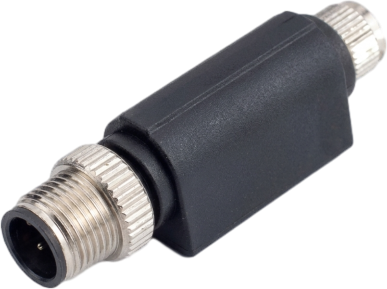
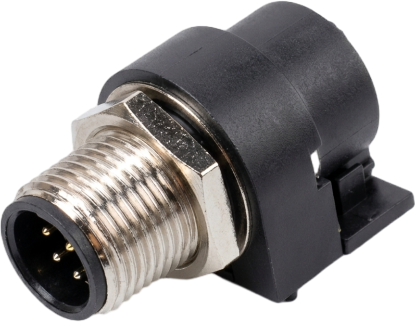
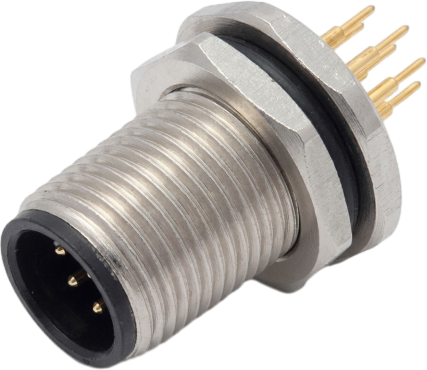
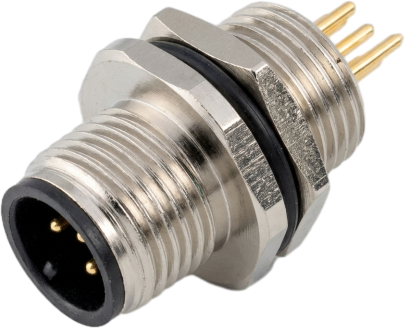
The HYM12 and HYM16 waterproof circular series are both rated IP67. HYM12 carries 2 to 8 contacts at 2 to 5 A with 1500 V AC dielectric withstanding voltage, insulation resistance above 200 MΩ and an operating range of −25 °C to +85 °C. HYM16 raises current capability to 15 A with 2500 V AC dielectric strength for the same IP67 sealing.
Where continuous immersion is genuinely required, the HY-02 K series is the correct starting point. It reaches IP68 when mated and correctly assembled onto its cable, with IP66 as the guaranteed minimum, across 2 to 32 contacts in 0K to 2K shells. The K series shares the B series insulator system but adds a reinforced shell for outdoor duty.
Bayonet-coupled circular ranges such as the YQ3 series are also rated IP67, which covers the vast majority of outdoor equipment that is rained on but not submerged.
The Interface, Not the Connector, Is the Weak Point
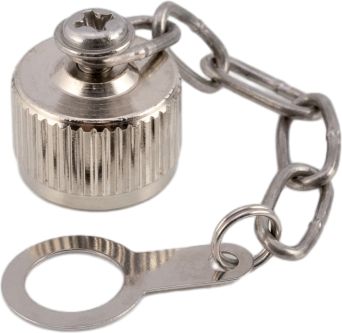
A connector body tested to IP68 in isolation says nothing about the assembled cable. Nearly every field failure happens at one of three places: the cable entry, where the gland must compress against the correct jacket diameter; the mated interface, where a single grain of grit on the seal is enough to create a leak path; and the unmated half, which has no protection at all unless a dust cap is fitted.
This is why the K series rating is conditional on correct assembly. Oversized cable, a jacket that cold-flows under the gland, or a backshell torqued by feel rather than to specification will all produce a connector that passes bench testing and fails in service.
Specifying Sealing Correctly
- State the environment, not just the code. “IP68” is not a requirement; “1 m depth for 24 h, cycled between −20 °C and +60 °C” is.
- Specify the cable. Sealing is a system property of connector plus jacket diameter plus gland. Give the jacket material and OD range.
- Ask about pressure cycling. Temperature swings pump water past seals that hold perfectly at constant temperature.
- Do not over-specify. An IP68 connector on an indoor panel adds cost, weight and mating force for no benefit. IP67 covers most washdown and weather exposure.
A Note on Vapour and Condensation
A perfectly sealed enclosure has its own problem: moisture trapped at assembly condenses on the coldest surface, which is often the contact area. For equipment that cycles through temperature extremes, a sealed connector plus a breather element in the enclosure is usually more reliable than chasing a higher IP number on the connector alone.
Talk to a Hengyu application engineer:
Guangzhou Hengyu Electronic Technology Co., Ltd. · No. 188 Kaiyuan Avenue, Huangpu District, Guangzhou, China
Direct Inquiry Email: sales@hengyu-connector.com
Official WhatsApp: +86-20-87831269